Fast & Furious: Hollywood Drift First Impressions from Universal Studios Hollywood!

Last week Universal Studios Hollywood quietly started technical rehearsals for their highly anticipated new roller coaster, Fast & Furious Hollywood Drift. We were lucky enough to be visiting Universal this past Monday when it was running, and were able to get a couple of rides on the unique new coaster. We’ll want to give a more complete review when the ride officially opens and we can get on it a few more times (and in more spots), but wanted to give our initial impressions of it so far.
Background
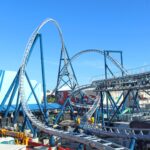
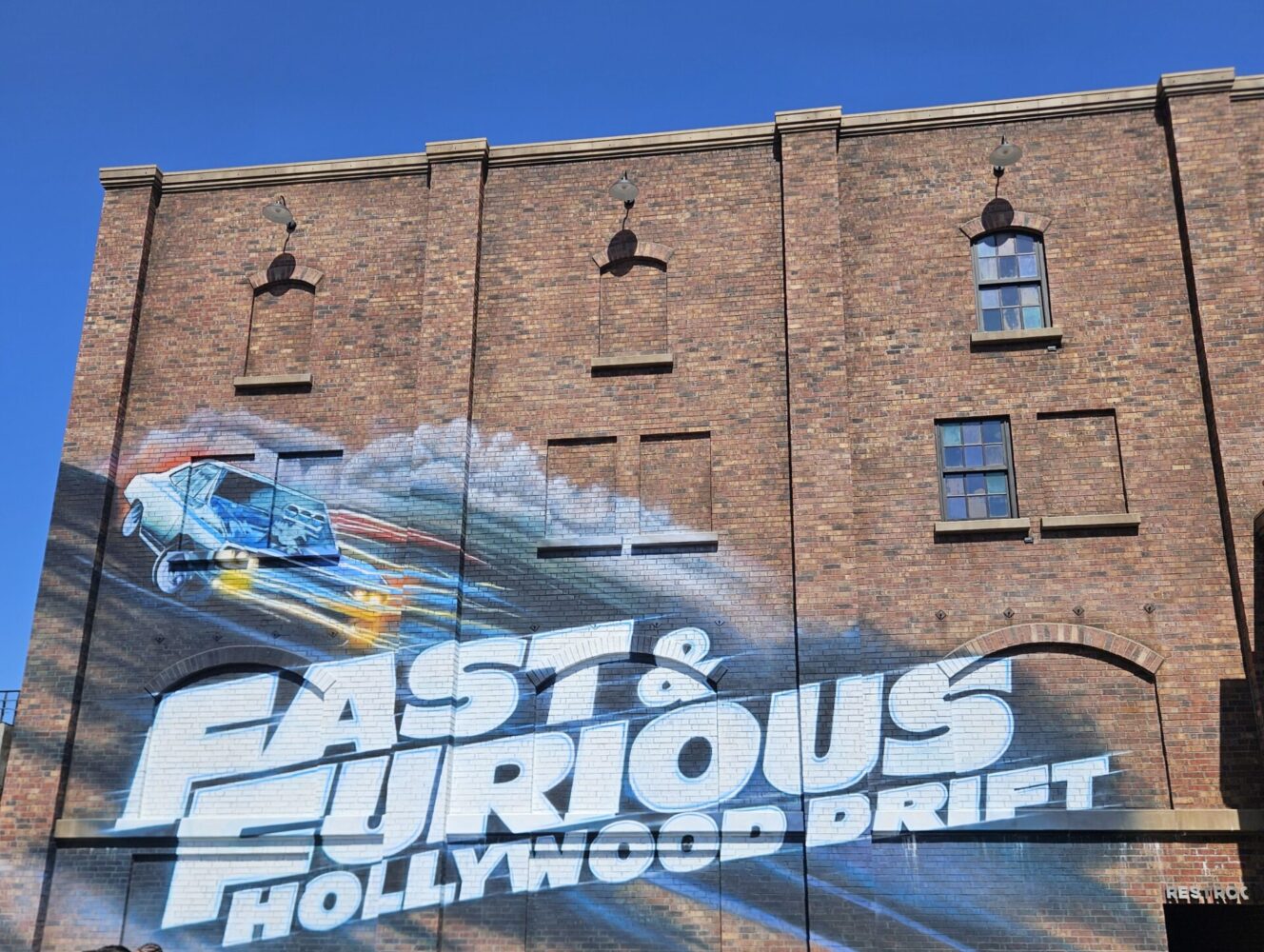
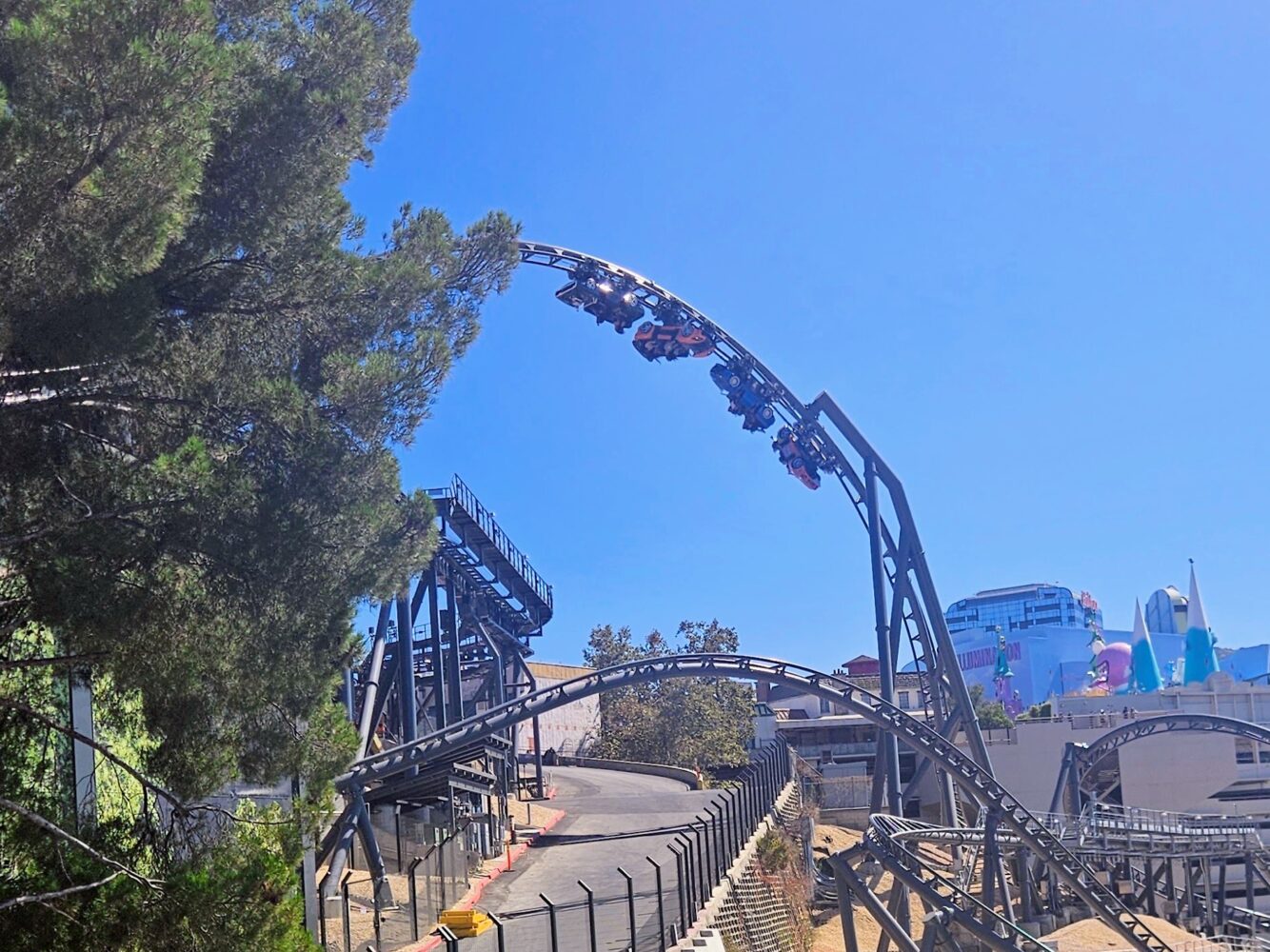
If somehow you’ve missed it so far, Fast & Furious Hollywood Drift is the new LSM-launched coaster opening at Universal Studios Hollywood this year. The ride starts in the upper lot of the park, and travels along 4,100 feet of track down into the lower lot and back up over and under the Starway escalators. The launches hit 72 mph at the highest speed, making it the fastest ride in the park. It’s also the only one with inversions, and, most noticeably, features a unique controlled “drifting” element that allows the cars to turn and spin throughout the ride.

The Cars
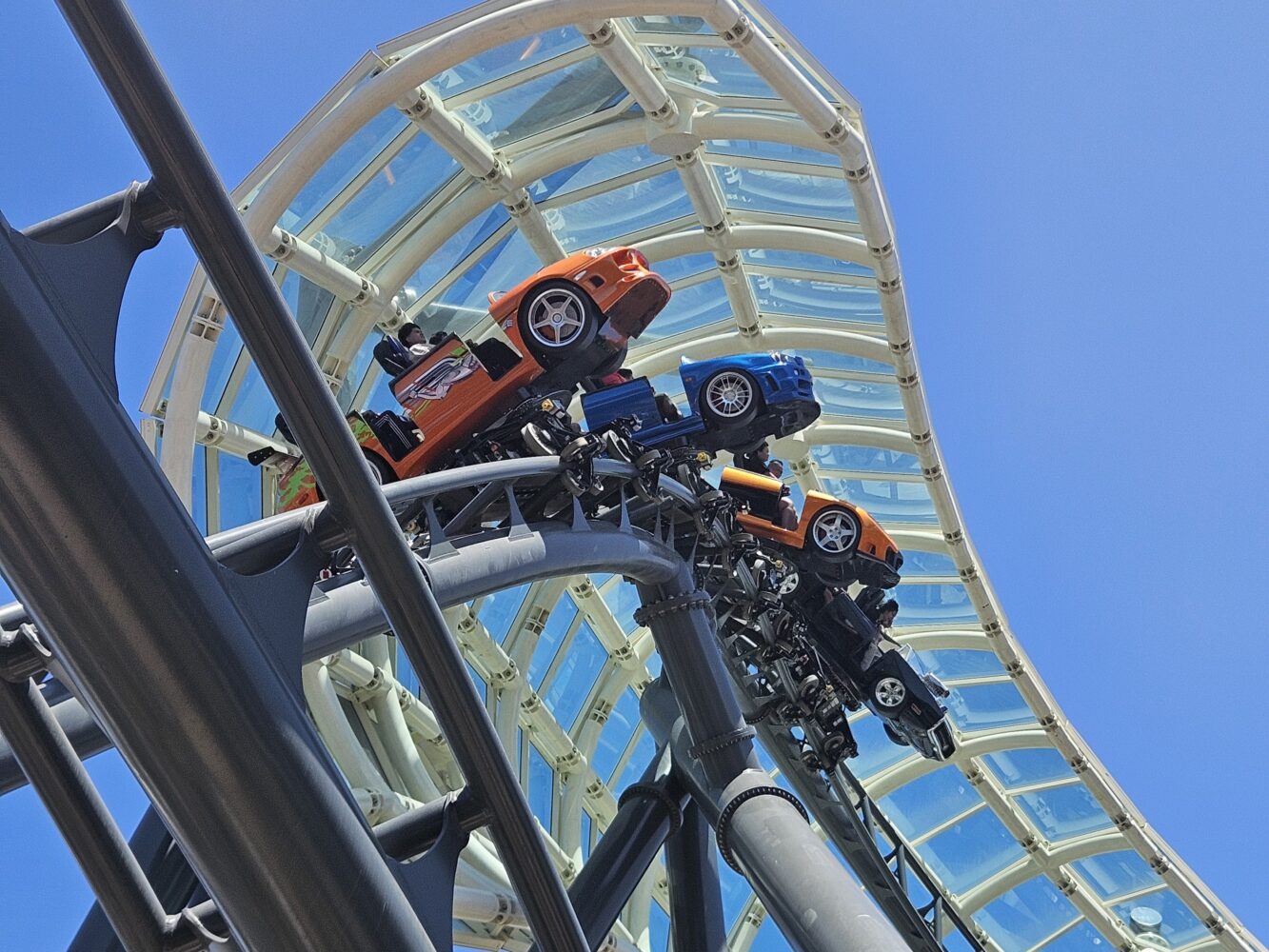
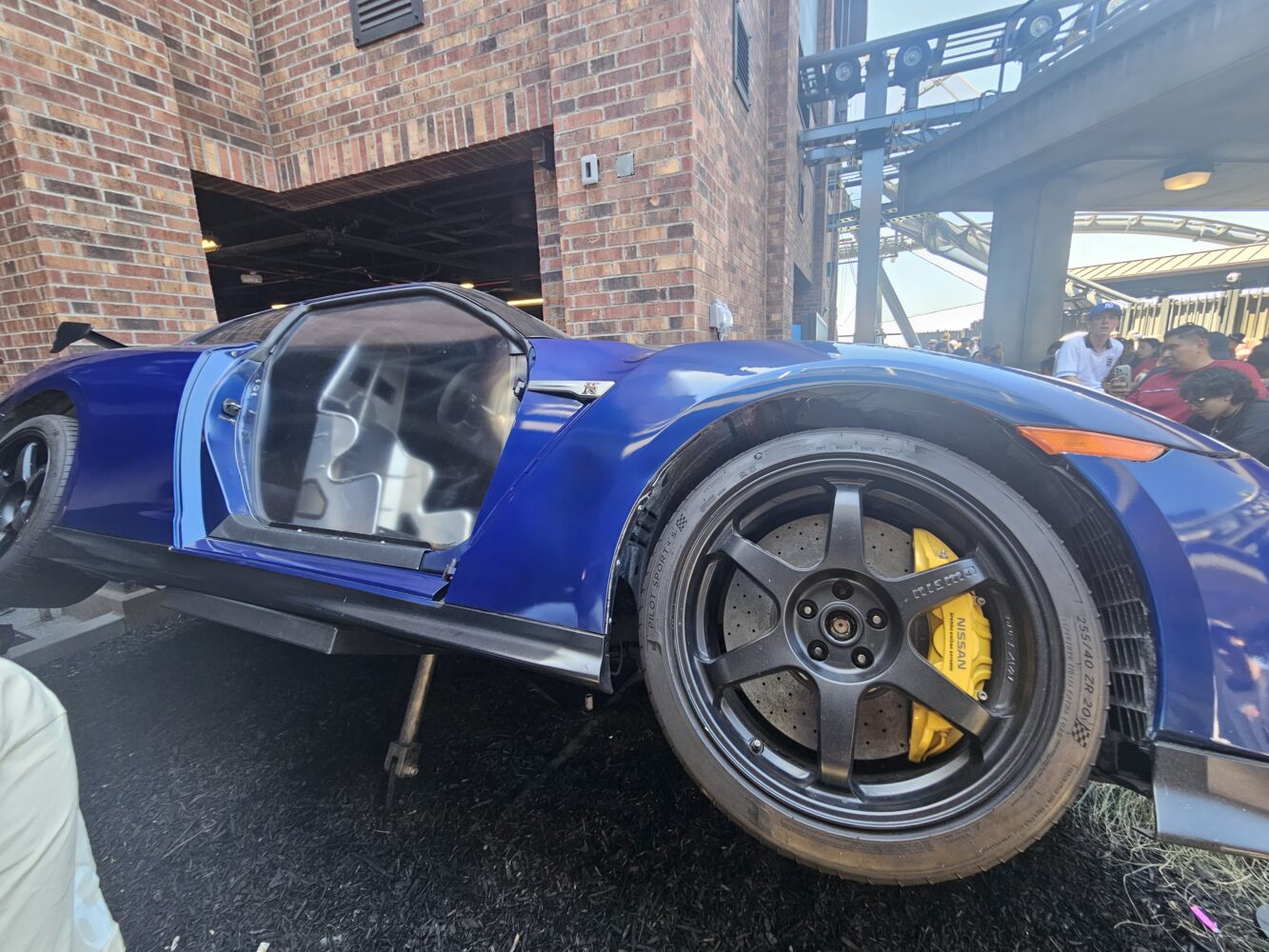
The first thing that stands out on Hollywood Drift are the trains with their four car designs. The cars sit noticeably high above the track because of the large mechanism for controlling their turns. Each vehicle is modeled on a different car from the film franchise, a Dodge Charger, Mazda RX-7, Nissan Skyline GT-R, and a Toyota Supra. Each of the four cars has a unique drifting pattern, so the rides are noticeably different depending on where you sit.
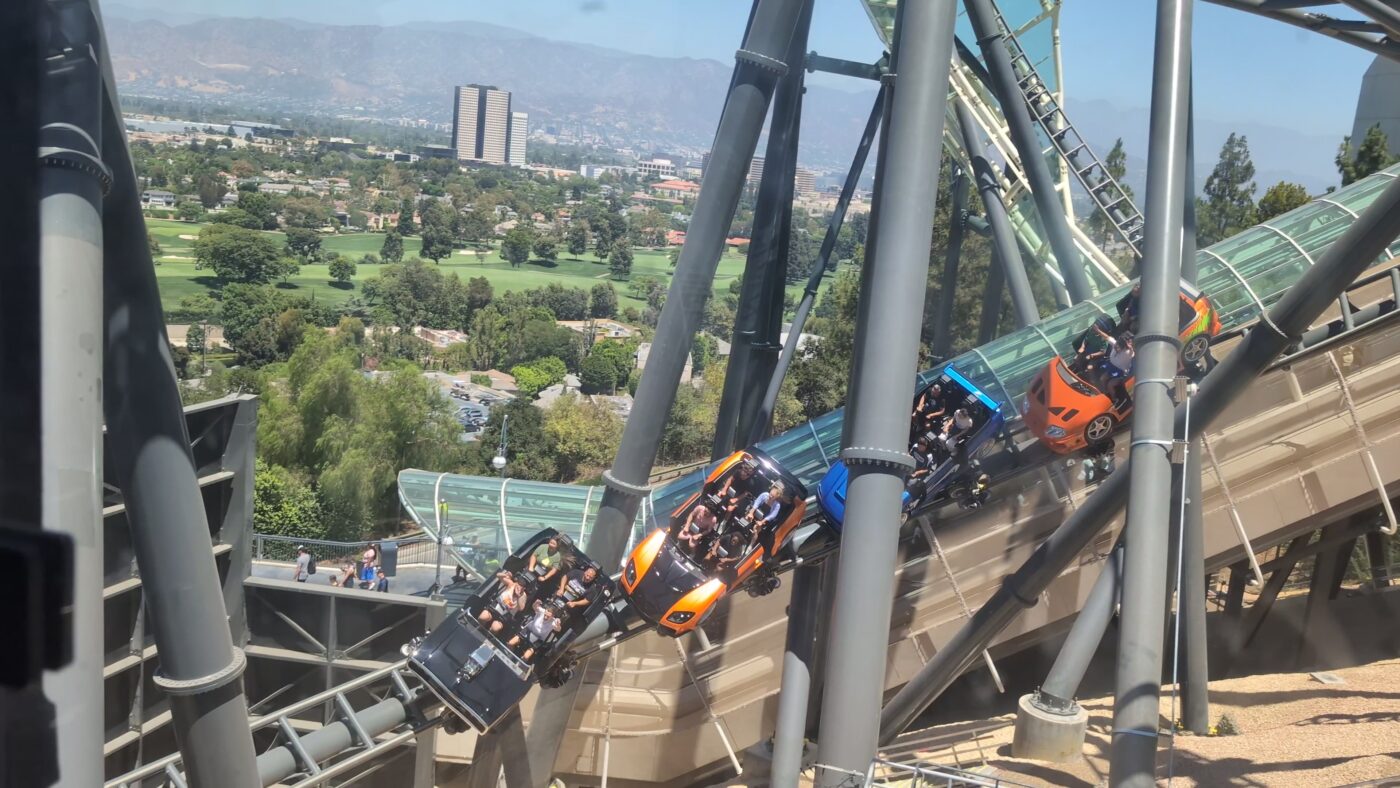
Each car has onboard audio but unlike most rides it’s only used to make car sound effects. There’s no one talking to you, no music score, just the rev of your engine and sounds of the cars skidding. The sounds are matched to each vehicle, so the noise of the engine matches the car, and the skids will change depending on how your car is drifting. Both rides we got on it ended up in the Mazda, the second car, so our impressions are limited to it, but we did at least get the front and back row.
The Ride
The drifts really are a unique roller coaster experience, and it definitely doesn’t feel like “spinning.” First, the cars turn extremely smoothly, and match the speed of the ride at a given section. It’s never a jarring or jerking spin. The fluid turning and the careful programming also make the rotations feel like they match the ride layout. You’re never spinning in a way that doesn’t feel right. It also rarely actually does a full 360 degree spin, or at least not super fast, and it never spins more than that. So while it can get a little disorienting, it didn’t ever feel dizzying. Universal Creative VP Jon Corfino told us during our interview with him a couple weeks ago that there’s no feeling of motion sickness, and he’s completely right.
The unique drift pattern for each car also creates fun moments where the cars are facing each other. Since we only got to ride it in the Mazda we don’t know all the moments where you get fun views, but there’s a good one early in the ride where the first car turns back to face the second, letting you wave to your fellow riders. A big highlight taking advantage of the controlled turning is also on the 2nd launch at the bottom of the hill, where the cars skid backwards into the launch. No switch track needed to add a reverse launch into the ride!
The cars hit the big 3rd launch facing forward again, hitting peak speed going up the hill. Interestingly, the launches didn’t feel as intense as they do on something like an Intamin blitz coaster. I think that’s because the cars never actually slow down all that much, so like with the spinning the launches are never jarring or jerky. It’s a much smoother launch experience, like if you were in a car that was smoothly accelerating.
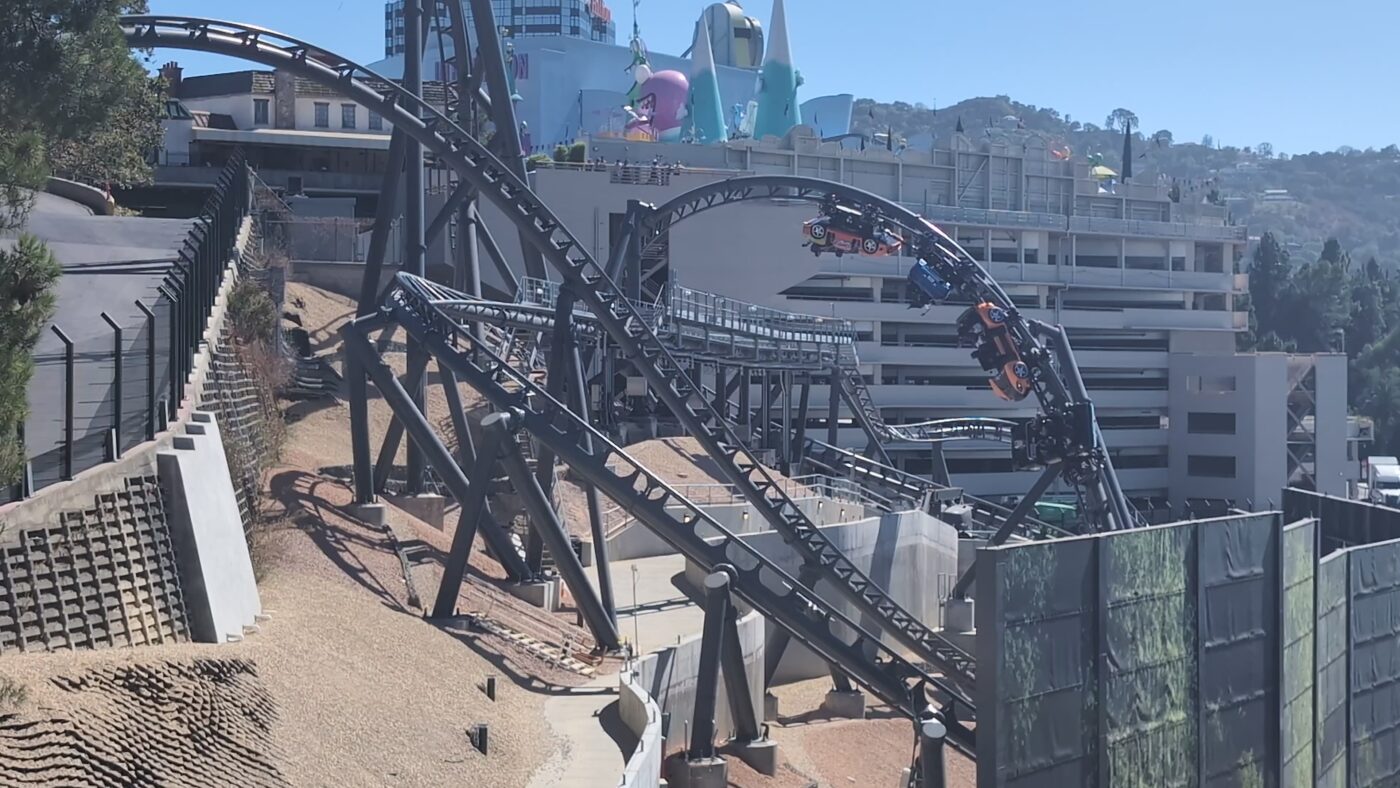
The standout for most people is probably going to be the element after the last launch over the Starway. Because of the way the cars spin, you’re basically forced to look up (down) at the people on the escalators. Embrace your inner Universal Studios Osaka and give them a wave!
The Operations
We did want to touch on Hollywood Drift’s operations and queue, with the BIG caveat that operations are probably the biggest thing that could change during technical rehearsals. On our first ride the queue stretched all the way out towards the entrance to Super Silly Fun Land and Minion Mayhem. Everyone waits in the outer section, but once under the actual entrance sign splits into standby, express, and single rider.
We went standby for the first ride, and in total it took about 3.5 hours. A big chunk of that was when it went down for a while when we were still in the outside section of the line, though. The queue has cars from the movies, and QR codes you can scan to learn more about them (and “collect” them all). It also has a few sections with really good views of the track, including along both sides of the fourth launch. If there was one main downside, the extended queue is only slightly shaded, so on a hot day it was getting pretty toasty.
The single rider line was much better. Using it later in the day, our wait was only about 30 minutes.
At times trains were dispatching as quickly as every 40 seconds, although they were averaging a little slower than that (to be expected with a soft opening). The only other slightly longer delay was during a roll back on the last launch, but even that got restarted pretty quickly.
The main issue seemed to be the bottleneck at the lockers and metal detectors. It ended up to the point that trains weren’t always even full when dispatched because the line after the metal detectors was empty. This is the only ride at Universal Studios Hollywood with a locker/metal detector system (similar to Velocicoaster), so there’s probably a learning curve being worked out on these. That’s the reason for the technical rehearsals, after all!
In our interview with Jon Corfino he said that one of the biggest surprises he expects people to have is the “connection with a car versus a conventional roller coaster,” and I think that nails it. After two rides, the fluid motion, the engine sounds, the skids and acceleration all add up to something that doesn’t really feel like a roller coaster, even when it’s sending you upside down. It captures that stunt driving sensation in a way no other ride I’ve been on does. We can’t wait to get back on it for a full review when it opens, especially in the other cars, but based on our first impressions Universal Studios Hollywood has something special in Fast & Furious Hollywood Drift.
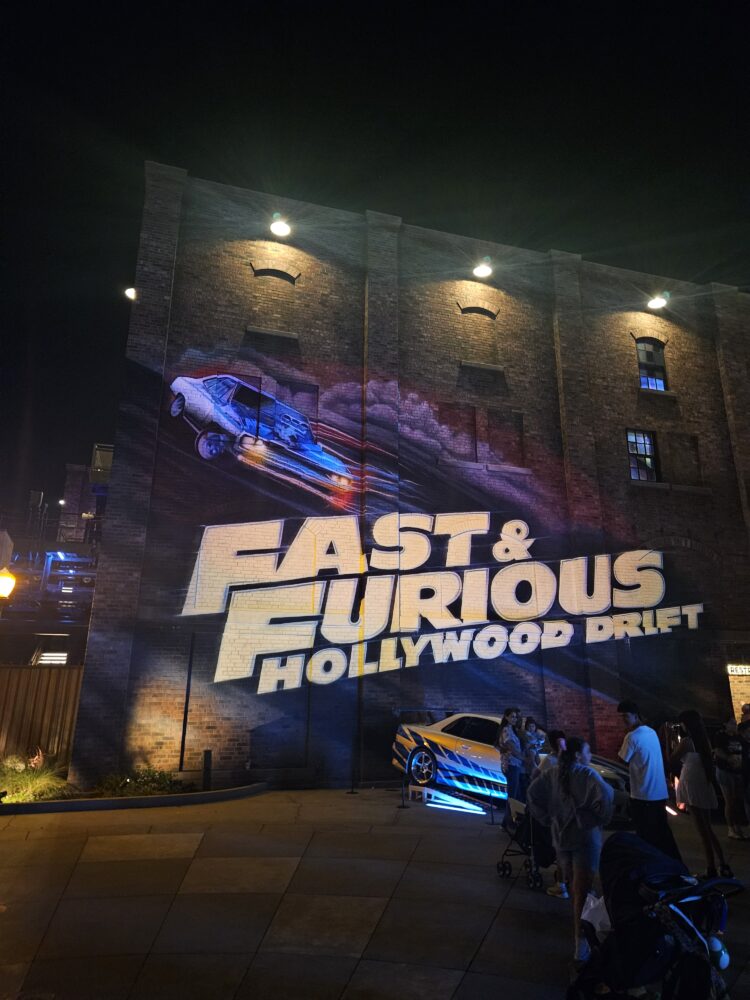
For the latest updates on the ride, and news about the opening date, make sure to check the Universal Studios Hollywood Fast & Furious: Hollywood Drift page, and connect with us on social media @Coaster101: Facebook | Twitter | Instagram. If you’ve gotten a ride on Fast & Furious: Hollywood Drift, let us know what you thought, and which car you think is best so far!